
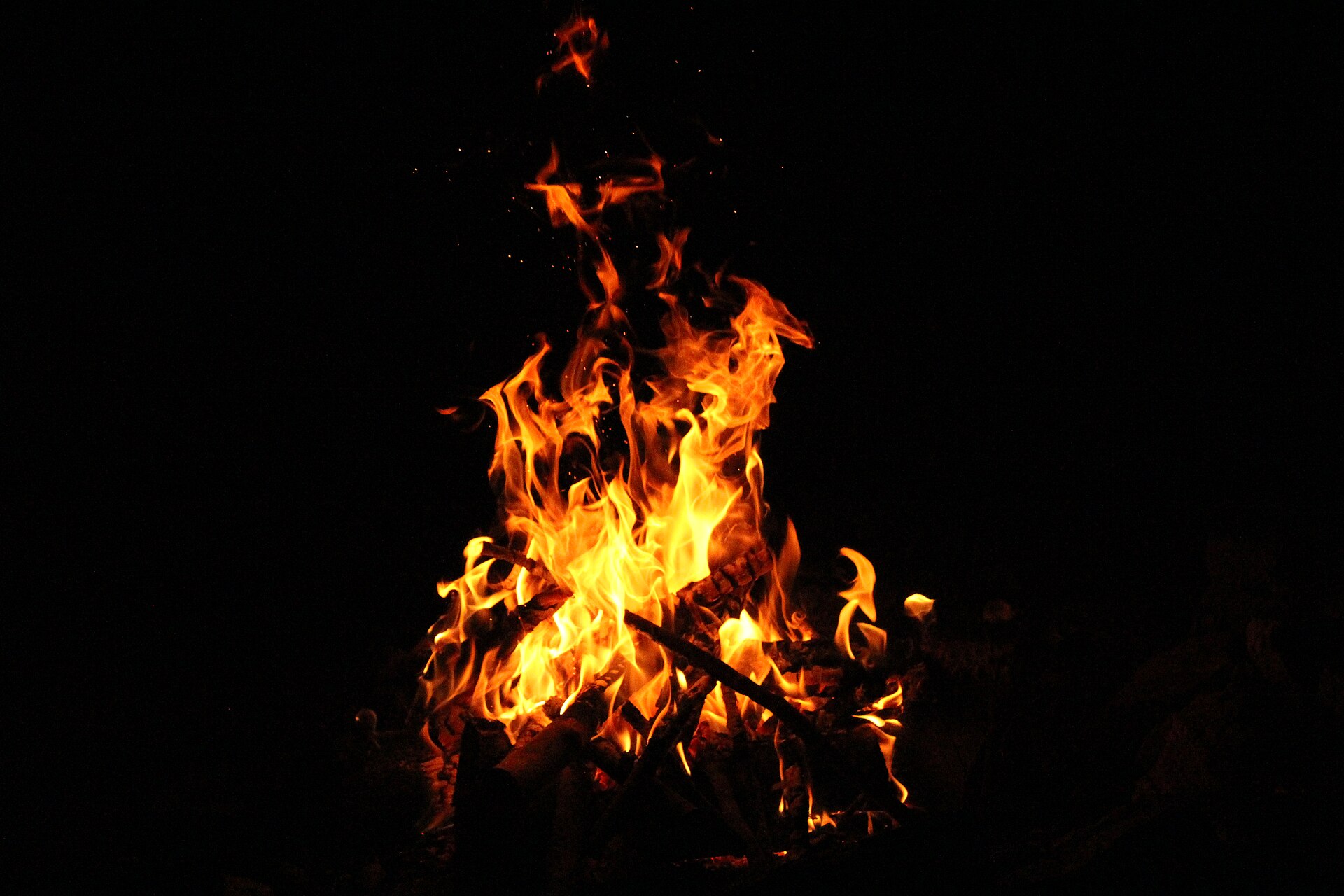
You make fire by passing a small flame from one material to the next. Start with something that catches easily, then add thin sticks, then bigger wood. A homemade fire starter gives that first flame a longer life, so the sticks have time to catch.
Table of Contents
What does a fire actually need?
A fire is not one thing. It is a chain of three materials. Each one lights the next.
- Tinder or a fire starter: small, dry bits of material, or a flammable product, that burn first. They hold the flame until the next layer catches.
- Kindling: small sticks and twigs. As they burn, the fire grows.
- Fuel: larger logs. They keep the fire going for the long run.
Most failed fires break the chain at the first step. The flame dies before the kindling catches. Fix that, and the rest gets much easier.
You also need air. A fire packed too tightly starves. Leave gaps so oxygen can reach the flame.
Is tinder different from a fire starter?
The words overlap. Some guides use them as the same thing. Others call natural materials “tinder” and man-made ones “fire starters.”
The name matters less than the job. Both exist to hold a flame long enough for kindling to catch. The real question is how long the material burns. A longer burn gives you more chances to build the fire.
Natural tinder includes:
- Pine cones
- Pine needles
- Wood shavings
- Wood chips
- Dried orange peel
Man-made options include store-bought starters and the homemade ones below.
Always keep it dry. Keep your tinder in a bag or a lidded container in your pack.
Which homemade fire starters work best?
One writer tested five homemade options, using items many people already have at home. The results were uneven. Some worked well. Some did not work at all.
Cotton balls dipped in wax
This was the clear winner. The flame was tall and easy to start. One wax-dipped cotton ball burned for a notably long time for something so light.
You melt candle wax, then dip the cotton in it. The usual trick is a tin can set in a pot of water, like a double boiler. Be careful with the heat. Keep your fingers and the cotton away from the flame.
Make these before the trip. You will probably not have wax at camp. Store them in a sealed plastic bag so wax does not smear your other gear.
Cotton balls with petroleum jelly
This one surprised the tester. A cotton ball rubbed in petroleum jelly caught from a lighter at once. It burned for about two and a half minutes. A plain cotton ball, used as a control, barely showed a flame.
You can make these on the spot if you carry the jar and cotton. Or make them at home and bag them. A jar adds weight and takes space in your pack.
Greasy chips
A pile of corn chips burned for several minutes. Grease leaked out of the charred chips afterward. The tester read that any greasy chip should work. The bonus is obvious: it is also a snack.
Dryer lint in a cardboard tube
This did not work. The tester tried twice, and the flame died both times. Standing the tube upright changed nothing.
One guide explained why. Much lint today comes from synthetic clothes, so it may be plastic. Plastic is a poor starter and a bad thing to burn. Tightly packed lint also blocks airflow. It should be loose and fluffy, with no fabric softener. Lint with pet fur smells bad. Another guide added that synthetic material smells and releases chemicals into the air.
Hand sanitizer
This failed too. Sanitizer squeezed onto damp, rotting wood shreds and a small stick did not catch. The tester then tried it on dry leaves, and those did burn. So sanitizer is not a fix for wet wood. The dry leaves were likely doing the work.
How do you choose a method?
Match the starter to your situation.
- Planning ahead: make wax-dipped cotton balls. They burn longest and pack flat.
- Packing light: pre-make petroleum jelly cotton balls and bag them. This saves the weight of the jar.
- Forgot something: greasy chips can work in a pinch.
- Skip: lint tubes and hand sanitizer. Neither earned a place in the test.
Other ideas exist, such as wine corks soaked in rubbing alcohol, egg cartons filled with lint and wax, or shredded paper in cupcake liners topped with wax. These were mentioned as creative options. Treat them as things to try at home first, not as proven methods.
Test any starter in your backyard before you rely on it. A trial in a safe spot beats a surprise on a cold night.
Can you gather tinder where you camp?
Not always. Natural tinder looks free, but rules may apply.
Many areas limit or ban the collection of firewood and tinder. This includes most U.S. National Parks and BLM land. Leave No Trace principles also call for care.
Ask the land manager first. Do this before the trip, not at the fire ring.
Homemade starters sidestep the question. You bring them with you, so you take nothing from the site. That is one more reason to make a few at home.
A few safety habits apply no matter what you use:
- Light your fire only where fires are allowed.
- Clear the ground around the fire spot.
- Keep water close by.
- Never leave a fire alone.
- Put it fully out before you leave.
Learn the basics, carry a few good starters, and practise at home. Your first fire will come together faster than you expect.
Related reading
- Pitching a Tent as a Patrol: Choosing the Site, Setting Guy Lines and Dealing with the Morning After Rain
- Sleeping Warm at 0 C: Layers, Pads, Hats and the Myths That Keep Campers Cold
Sources
- Making a Homemade Fire Starter (explorerchick.com, accessed 2026-11-02)
Photo: Campfire September 2017, by Hameltion, CC BY-SA 4.0 (Wikimedia Commons)
